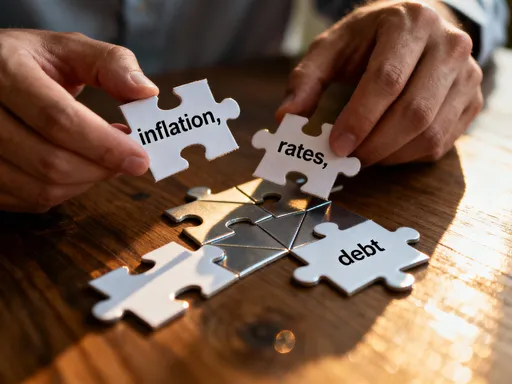
How I Turned Market Predictions into Smarter Debt Payoffs
What if you could use market trends not to chase returns, but to crush your debt faster? I stopped treating debt repayment like a blind grind and started aligning it with economic shifts. It wasn’t about timing the market perfectly—just understanding its rhythm. This isn’t speculation; it’s strategy. Here’s how I leveraged market awareness to pay off debt smarter, not harder—and how you can too, without taking reckless risks. By observing broader financial patterns, I discovered that timing, context, and flexibility are more powerful than sheer willpower alone. The result was not just faster debt freedom, but greater confidence in every financial decision along the way.
The Hidden Link Between Markets and Debt
Most people view debt repayment as a standalone task, separate from the broader economy. They make monthly payments without considering how shifting interest rates, inflation, or job market trends might influence their strategy. Yet, personal finance does not exist in a vacuum. The cost of borrowing, the value of savings, and even income stability are all shaped by macroeconomic forces. When inflation rises, for example, fixed-rate debts become relatively cheaper over time because you repay them with money that has less purchasing power. Conversely, during periods of rising interest rates, variable-rate loans become more expensive, increasing the urgency to refinance or accelerate repayment.
Understanding this connection allows for smarter decision-making. Instead of following a rigid plan regardless of external conditions, financially aware individuals adjust their approach based on what’s happening in the economy. A homeowner with an adjustable-rate mortgage might choose to refinance into a fixed rate before the Federal Reserve raises benchmark rates. Someone with credit card debt might delay large extra payments if they anticipate a promotional 0% balance transfer offer coinciding with a seasonal banking incentive. These are not speculative gambles—they are informed moves grounded in observable trends.
The danger of ignoring market context is real. Without awareness, individuals may overpay on low-interest debt while missing opportunities to reduce higher-cost obligations. They might also deplete emergency savings to pay down debt aggressively, only to face unexpected expenses during an economic downturn. Market-informed debt management doesn’t mean predicting every turn in the economy; it means recognizing directional shifts and adapting accordingly. Just as a sailor adjusts sails to the wind rather than fighting against it, smart debt payers align their efforts with economic currents instead of pushing forward blindly.
This strategic mindset transforms debt repayment from a mechanical chore into an active component of overall financial health. It encourages thinking beyond minimum payments and interest rates to include timing, liquidity, and opportunity cost. For instance, if bond yields are falling, signaling potential rate cuts, it could be wise to wait a few months before refinancing a student loan—locking in a lower rate later. Similarly, when unemployment numbers rise, indicating possible income instability, it may be prudent to slow extra debt payments and build cash reserves instead. These decisions are not about avoiding responsibility—they’re about exercising wisdom.
Why Traditional Debt Strategies Fall Short
Two popular methods dominate personal finance advice: the debt snowball and the debt avalanche. The snowball method involves paying off the smallest balances first, building momentum through quick wins. The avalanche approach prioritizes debts with the highest interest rates, minimizing total interest paid. Both are logical and effective in theory, but they share a critical limitation—they are static. They assume financial conditions remain constant over time, which rarely reflects reality. Markets shift, rates change, incomes fluctuate, yet these models offer no guidance on how to adapt when circumstances evolve.
Consider someone using the avalanche method to aggressively pay down a fixed-rate car loan at 4%. Meanwhile, mortgage rates drop from 6.5% to 5.8%, creating a refinancing opportunity that could save hundreds per month. Because their focus is solely on eliminating high-interest debt, they don’t pause to evaluate whether redirecting funds toward refinancing preparation might yield better long-term results. In this case, sticking rigidly to the plan leads to a missed opportunity. The same applies to those following the snowball method—if emotional motivation comes at the expense of economic efficiency, progress may feel good but fall short of optimal.
Another flaw in traditional strategies is their failure to account for income volatility. For many households, especially those reliant on commissions, seasonal work, or gig income, cash flow isn’t steady. A one-size-fits-all repayment schedule can lead to strain during lean months, even if the annual average income supports faster payoff. Market-aware planning acknowledges these fluctuations. It builds in flexibility so that repayment accelerates during strong economic periods and eases when uncertainty rises.
Additionally, conventional methods often overlook opportunity cost—the value of what you give up when making a financial choice. Every dollar sent toward debt is a dollar not available for investing, saving, or seizing time-sensitive financial opportunities. During periods of low market volatility and high bond yields, for example, keeping some liquidity might allow for short-term fixed-income investments that earn more than the interest saved by prepaying low-rate debt. Traditional models rarely incorporate such comparisons, treating debt reduction as the only priority regardless of context.
By relying solely on these static frameworks, individuals risk optimizing for the wrong metric—speed of repayment—while neglecting overall financial resilience. A smarter path integrates the strengths of these methods—behavioral motivation from the snowball, cost efficiency from the avalanche—while adding dynamic responsiveness to economic conditions. This hybrid approach doesn’t discard proven tactics; it enhances them with situational intelligence.
Reading the Market Without Guessing the Future
Many people avoid paying attention to economic indicators because they fear they’ll need to predict market movements—a daunting and often futile task. But strategic debt management doesn’t require forecasting. It requires observation. Instead of trying to guess where rates will be a year from now, focus on what the data says today and how it may influence near-term decisions. Key indicators such as Treasury yields, consumer price index (CPI) reports, and Federal Open Market Committee (FOMC) statements provide valuable signals without demanding speculative leaps.
For example, when the 10-year Treasury yield begins a sustained decline, it often precedes lower lending rates across mortgages, auto loans, and personal loans. Recognizing this trend doesn’t mean betting on how low rates will go—it means preparing to act when refinancing becomes advantageous. Similarly, rising CPI numbers suggest inflation is persistent, which may prompt central banks to maintain or increase interest rates. This context alerts borrowers with variable-rate debt that their payments could rise, prompting proactive steps like locking in a fixed rate or increasing repayment before the hike takes effect.
Another useful signal is consumer spending data. When retail sales decline over several months, it may indicate weakening demand and economic slowdown. In such environments, central banks often consider rate cuts to stimulate growth. Anticipating this shift, a borrower might choose to temporarily slow extra debt payments and hold onto cash, knowing that cheaper credit could soon be available for consolidation or refinancing. Again, this isn’t prediction—it’s pattern recognition combined with prudent preparation.
The goal is not to become a financial analyst but to develop a basic fluency in economic trends. Subscribing to summary reports from reputable sources like the Bureau of Labor Statistics, the Federal Reserve, or major financial news outlets can provide timely updates without overwhelming detail. Setting calendar reminders to review key indicators quarterly helps maintain awareness without obsession. Over time, this practice builds intuition—knowing when conditions are shifting and when action may be warranted.
Crucially, this approach avoids the pitfalls of emotional decision-making. When markets dip, fear can drive people to halt all nonessential spending, including extra debt payments, even when rates are favorable and income is stable. Conversely, during bull markets, overconfidence may lead to aggressive prepayments while ignoring rising borrowing costs elsewhere. By grounding decisions in data rather than emotion, individuals maintain consistency and control. Market awareness becomes a tool for discipline, not distraction.
Strategic Pausing: When Slowing Down Pays Off
One of the most counterintuitive yet powerful concepts in smart debt management is the idea of strategic pausing. Conventional wisdom insists that debt should be eliminated as quickly as possible, with any delay seen as failure. But there are times when slowing down—or even making only minimum payments—can lead to better long-term outcomes. This isn’t about procrastination or lack of discipline; it’s about tactical timing. Just as a runner paces themselves during a race, a financially savvy person knows when to accelerate and when to conserve energy.
Consider a household with credit card debt at 17% interest, steadily making $500 monthly extra payments. Then, news emerges that the central bank is likely to cut rates within six months due to slowing economic growth. At the same time, the family’s primary earner faces uncertain hours at work. In this scenario, continuing aggressive repayment could deplete emergency savings, leaving them vulnerable if income drops. A smarter move might be to pause extra payments temporarily, preserve liquidity, and prepare to consolidate debt at a lower rate once new balance transfer offers appear. The short-term slowdown actually supports faster, safer debt elimination later.
Another example involves student loans. Suppose someone is paying extra toward a federal loan at a fixed 5% rate. If interest rates are expected to fall, private lenders may soon offer refinancing options below 4%. By holding off on large prepayments for a few months, the borrower preserves capital to take advantage of the lower rate. The interest saved over the life of the loan far exceeds the cost of delaying a few months of extra payments. This requires patience and planning, but the payoff is substantial.
Strategic pausing also applies to those considering major life changes. A person planning to relocate for a job, start a business, or buy a home may benefit from maintaining higher cash reserves even while carrying moderate debt. Using market signals—such as tightening labor markets or rising housing prices—they can time these transitions more effectively. Rather than rushing to zero debt, they aim for optimal readiness. This mindset shift—from speed to strategy—transforms debt repayment into a flexible, forward-looking process.
Of course, this approach only works with clear boundaries. Pausing must be intentional, time-bound, and based on real economic signals—not excuses. It requires tracking progress, setting review dates, and having a reactivation plan. Without these safeguards, pausing can become avoidance. But with discipline, it becomes a legitimate tool in the financially intelligent toolkit—one that recognizes that sometimes, the fastest way to finish is to slow down at the right moment.
The Risk-Aware Repayment Framework
To integrate market awareness into debt repayment without falling into recklessness, a structured framework is essential. This system balances proactive decision-making with strong risk controls, ensuring that flexibility does not become impulsivity. At its core is the principle of informed responsiveness—acting based on data, not emotion, and always within predefined limits.
The first element is a liquidity buffer. Before adjusting repayment pace, individuals should ensure they have three to six months of essential expenses saved. This cushion protects against income disruptions and prevents forced borrowing during downturns. It also provides the flexibility to act when opportunities arise—such as taking advantage of a limited-time 0% financing offer—without derailing other financial goals.
Next is the establishment of decision triggers. These are specific economic thresholds that prompt a review of the current debt strategy. For example, a trigger might be: “If the federal funds rate drops by 0.5 percentage points, evaluate refinancing options for all variable-rate debt.” Or: “If unemployment rises above 5% for two consecutive months, pause extra payments and strengthen emergency savings.” These rules remove guesswork and prevent reactive behavior, ensuring changes are deliberate and justified.
Another key component is opportunity cost assessment. Before allocating extra funds to debt, individuals should ask: Could this money serve a higher purpose right now? In a period of high inflation, paying down fixed-rate debt may be especially valuable because future dollars will be worth less. But during times of low inflation and rising investment yields, holding cash in a high-yield savings account or short-term bond fund might earn more than the interest saved by prepayment. This comparison isn’t about choosing between debt and investing—it’s about making conscious trade-offs.
Risk management also means avoiding leverage. Just because rates are low does not mean it’s wise to borrow more to pay off existing debt—unless the terms are clearly favorable and the repayment plan is secure. No strategy should rely on uncertain future income or speculative gains. The goal is stability, not optimization at any cost. Every decision should pass a simple test: Does this increase my long-term financial security, or does it expose me to unnecessary risk?
Finally, regular review intervals keep the framework dynamic. Monthly or quarterly check-ins allow for course correction without constant monitoring. During these reviews, individuals assess their debt balances, income stability, savings levels, and relevant economic indicators. They update their triggers if needed and confirm that their current strategy still aligns with their overall goals. This disciplined rhythm ensures that market awareness remains a tool for empowerment, not anxiety.
Real-Life Scenarios: Market Moves That Changed the Game
Take Sarah, a schoolteacher with $35,000 in federal student loans at a fixed 5.25% interest rate. She had been using the avalanche method, putting an extra $400 per month toward her loan. In mid-2022, as inflation surged, she noticed that private lenders began offering refinancing rates near 3.8% for borrowers with strong credit. However, the Federal Reserve signaled further rate hikes, suggesting private rates might rise soon. Rather than rush, she waited three months, then refinanced at 4.1%—still a significant improvement. By timing her move based on rate trends, she reduced her monthly interest cost and shortened her payoff timeline without locking in too early.
Then there’s James, who runs a small landscaping business and carries a home equity line of credit (HELOC) at a variable rate. In early 2023, as the Fed paused rate hikes, he anticipated that cuts might come within a year. Instead of accelerating repayment, he maintained minimum payments and used the freed-up cash to upgrade his equipment, which increased his earning capacity. When rates did begin to fall in 2024, he refinanced his HELOC into a fixed-rate home equity loan at 5.3%, well below the 7.2% peak. His strategic patience allowed him to improve both his business and his debt position.
Another example is Maria, a nurse with $12,000 in credit card debt at 19.99% APR. She planned to pay it off in 18 months but paused when a recession warning emerged. With layoffs rising in nearby industries, she decided to preserve $6,000 in savings rather than pay down the full balance. Six months later, her hospital reduced hours temporarily. Because she had liquidity, she avoided new borrowing. When the economy stabilized, she transferred the remaining balance to a 0% intro APR card and eliminated the debt interest-free. Her awareness of economic risk protected her progress.
These cases aren’t outliers. They reflect a growing trend of individuals using economic context to make smarter, more sustainable financial choices. None of them got rich from market timing. None took reckless risks. But all of them gained greater control over their financial lives by combining discipline with awareness. Their stories show that market-informed debt management is accessible, practical, and powerful when grounded in patience and planning.
Building a Sustainable, Smart Payoff Plan
The ultimate goal is not just to pay off debt, but to do so in a way that strengthens long-term financial health. A sustainable, smart payoff plan integrates market awareness without becoming obsessive. It relies on habits, tools, and boundaries that support consistent progress without burnout.
Start by setting regular review intervals—quarterly is often sufficient. Use these moments to assess your debt balances, income stability, savings level, and relevant economic indicators. Track changes in inflation, employment, and interest rates through reliable sources like government reports or established financial institutions. Avoid speculative commentary; focus on data, not opinions.
Use simple tools to stay organized. A spreadsheet or budgeting app can track repayment progress and flag upcoming decision points. Set calendar alerts for when your triggers are met—such as a rate drop or income change—so you don’t miss opportunities. Automate minimum payments to ensure consistency, but keep extra payments manual so you can adjust them based on conditions.
Develop a clear set of personal rules. For example: “I will not refinance unless the new rate is at least 0.75% lower than my current rate.” Or: “I will not reduce emergency savings below four months’ expenses, even to pay off high-interest debt.” These guidelines prevent emotional decisions and maintain balance across financial priorities.
Finally, cultivate patience. Market-informed debt management is not about instant results. It’s about making consistently better choices over time. Some months, you’ll accelerate repayment. Others, you’ll pause or redirect funds. The key is staying aligned with your overall financial rhythm. When knowledge meets patience, the payoff extends beyond numbers—it builds confidence, resilience, and lasting control.
Conclusion
Debt freedom doesn’t require ignoring the market—just understanding its role in your broader financial rhythm. By staying informed, not reactive, you gain control. This isn’t about getting rich quick; it’s about paying off debt right. When knowledge meets patience, the payoff goes beyond balance sheets—it builds lasting confidence. Market awareness doesn’t turn you into a trader or a speculator. It turns you into a more thoughtful, strategic steward of your money. You learn to see debt not as an enemy to be defeated at all costs, but as a dynamic part of your financial life that can be managed with intelligence and timing. The result is not just a zero balance, but a stronger, more resilient financial foundation for everything that comes next.