How I Found Calm Through Yoga and Mindfulness — A Beginner’s Healing Journey
Have you ever felt stuck in a cycle of stress, fatigue, or low energy, no matter what you try? I did. As someone new to holistic healing, I was skeptical—until I started blending simple yoga poses with mindfulness meditation every morning. Within weeks, I noticed real shifts: better sleep, clearer focus, and a sense of inner balance I hadn’t felt in years. This is not about instant miracles, but gentle, consistent practice. Here’s how this ancient mind-body synergy, rooted in Traditional Chinese wellness principles, helped me begin to heal from the inside out.
The Burnout Breakthrough: Why I Turned to Yoga and Meditation
For years, I moved through life on autopilot—waking up tired, rushing through chores, managing family schedules, and collapsing into bed only to repeat it all again. I was physically present but emotionally distant, as if I were watching my life through a fogged-up window. Headaches became routine. My shoulders stayed tight no matter how many hot showers I took. I tried everything: vitamin supplements, long walks, even cutting back on coffee. But nothing seemed to restore the energy I once had.
The turning point came one quiet Sunday morning. My youngest daughter asked why I always looked so sad. That question struck deep. I wasn’t depressed, but I realized I had become disconnected—from myself, from joy, from the simple rhythm of breathing without tension. That moment sparked a quiet determination. I began researching holistic ways to regain balance, not just physically but emotionally and mentally. I stumbled upon stories of women who found relief not through medication, but through daily rituals of movement and stillness. Many of them referenced practices rooted in Eastern traditions—especially those from Traditional Chinese wellness—emphasizing harmony, flow, and self-awareness.
What drew me in wasn’t the promise of a cure, but the idea of gentle restoration. These practices didn’t demand drastic changes. Instead, they invited presence, patience, and small, sustainable actions. I decided to give it a try—not as a last resort, but as a meaningful step toward reclaiming my well-being. I didn’t know it then, but that decision marked the beginning of a healing journey that would slowly reshape my days, my mindset, and my relationship with myself.
Mind Meets Body: The Science Behind Yoga and Mindful Awareness
At first, I thought yoga and meditation were just about relaxation. But as I read more, I learned they do far more than calm the mind—they actively reshape how the body responds to stress. Modern science now confirms what ancient traditions have long understood: the mind and body are deeply connected. When we practice mindful movement and breath awareness, we signal our nervous system to shift from a state of constant alertness to one of rest and recovery.
Most of us live in a prolonged “fight-or-flight” mode, driven by the sympathetic nervous system. This state evolved to protect us from danger, but in modern life, it’s often triggered by deadlines, family demands, or even constant digital notifications. When this system stays activated, it floods the body with stress hormones like cortisol. Over time, high cortisol levels can disrupt sleep, weaken immunity, and contribute to feelings of anxiety and mental fatigue. What I didn’t realize was that my body had been stuck in this survival mode for years—long after any real threat had passed.
Yoga and mindfulness meditation help activate the parasympathetic nervous system—the “rest-and-digest” counterpart. Through slow, intentional movement and focused breathing, these practices send signals to the brain that it’s safe to relax. Studies have shown that regular meditation can reduce cortisol levels by up to 30% over several weeks. Other research highlights improved emotional regulation, increased gray matter in brain regions linked to self-awareness, and enhanced attention span. These changes don’t happen overnight, but they are measurable and meaningful.
For me, understanding the science made the practice feel less abstract. It wasn’t just “feeling good”—it was about giving my body the biological signal it needed to recover from daily strain. I wasn’t trying to fix a disease, but to reverse the slow erosion of energy and peace that comes from chronic stress. Knowing that even ten minutes a day could support this shift gave me the motivation to keep going, especially on mornings when I felt too tired to begin.
Rooted in Tradition: How Chinese Wellness Complements Mind-Body Practice
As I deepened my practice, I became curious about the philosophical roots of what I was doing. I discovered that many of the principles behind yoga and mindfulness align closely with Traditional Chinese Medicine (TCM), a system of wellness that has guided health practices for over two thousand years. While yoga originates from India, its emphasis on balance, breath, and energy flow resonates deeply with TCM’s view of the body as an interconnected system of vital energy.
In TCM, this life force is called Qi (pronounced “chee”). Qi flows through pathways in the body known as meridians. When Qi moves freely, the body functions in harmony. But when it becomes blocked or imbalanced—due to stress, poor sleep, or emotional strain—discomfort and fatigue can follow. The goal of many TCM practices, such as acupuncture, qigong, and herbal support, is to restore smooth energy flow and maintain balance between opposing forces, known as Yin and Yang.
Yoga and mindfulness meditation support this same goal, though through different methods. Gentle stretches open the body, releasing physical tension that may restrict energy flow. Mindful breathing calms the mind and regulates the nervous system, helping to stabilize Qi. Even the act of sitting quietly and observing one’s thoughts can be seen as a way of “listening” to the body’s signals—something TCM practitioners have long emphasized. I began to see my morning routine not just as exercise, but as a daily act of tending to my inner garden, removing weeds of stress so that clarity and calm could grow.
One metaphor that stayed with me was that of a stream. When water flows freely, it’s clear, cool, and life-giving. But when it’s blocked by debris, it becomes stagnant and murky. That’s how I felt before I started—my energy clogged by years of unmanaged stress. Through consistent practice, I began to feel that stream clearing, drop by drop. I wasn’t chasing perfection, but simply creating conditions where my body and mind could return to their natural state of balance.
My First Moves: Simple Poses That Made a Difference
When I first looked up yoga routines, I felt overwhelmed. Videos showed advanced poses requiring flexibility I hadn’t had since childhood. But then I learned that yoga isn’t about how far you can stretch—it’s about how deeply you can feel. I started with just three beginner-friendly poses, practiced for five to ten minutes each morning. No mirror, no fancy mat, no pressure. Just me, my breath, and a quiet corner of the living room.
The first pose I adopted was Child’s Pose (Balasana). Kneeling on the floor, I lowered my hips to my heels, stretched my arms forward, and rested my forehead on the mat. At first, my knees protested, and my back felt stiff. But over time, this simple forward bend became a sanctuary. It gently stretched my lower back, released tension in my shoulders, and encouraged slow, deep breathing. I noticed that on days I began with Child’s Pose, I felt more centered, as if I had hit a reset button before the day even began.
Next, I added Cat-Cow (Marjaryasana-Bitilasana), a flowing movement done on hands and knees. Inhaling as I arched my back (Cow), exhaling as I rounded it (Cat), I synchronized breath with motion. This gentle spinal wave massaged my internal organs, improved circulation, and loosened stiffness from hours of sitting. More than that, it taught me to tune into my body’s rhythm. On mornings when my mind raced, focusing on the rise and fall of my spine helped anchor me in the present moment.
The third pose that surprised me was Legs-Up-the-Wall (Viparita Karani). I placed a cushion under my hips, lay on my back, and extended my legs vertically against the wall. It looked almost too simple to work—but within minutes, I felt a soothing release in my legs and pelvis. This pose promotes blood flow from the lower body back to the heart, reducing swelling and fatigue. I often practiced it in the evening, and it became a bridge between daytime activity and nighttime rest. Over time, these three poses became non-negotiable parts of my routine—not because they transformed me instantly, but because they reminded me, daily, to pause and care for myself.
Breathing Into Stillness: How I Built a 5-Minute Meditation Habit
If the yoga poses were the body’s invitation to slow down, meditation was the mind’s. At first, sitting still felt impossible. My thoughts raced—what needed to be done, what had been forgotten, what might go wrong. I would sit for two minutes, feel frustrated, and give up. I thought I was failing. But then I learned that meditation isn’t about stopping thoughts—it’s about noticing them without judgment and gently returning to the breath.
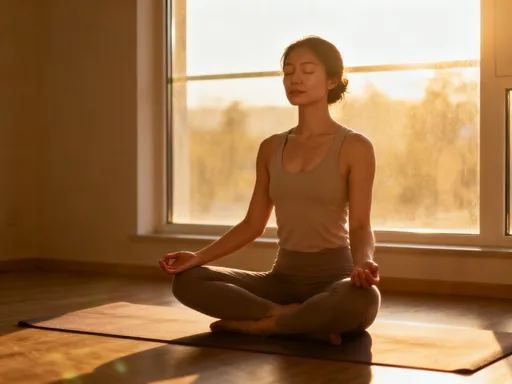
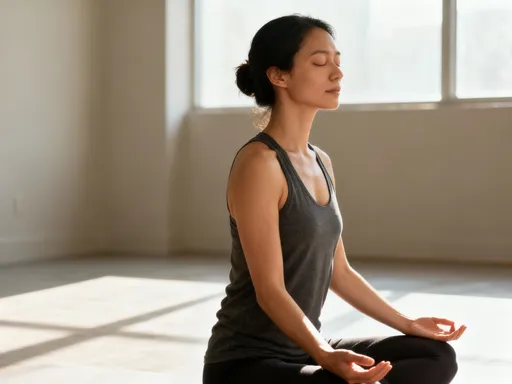
I started with a simple breath-focused practice. I sat comfortably, spine upright but not rigid, hands resting on my lap. I closed my eyes and brought my attention to the natural rhythm of my breath—feeling the cool air enter my nostrils, the slight rise of my belly, the warm air leaving my body. When my mind wandered (and it always did), I acknowledged the thought—“planning,” “worrying,” “remembering”—and softly returned to the breath. I used a timer, beginning with just three minutes and gradually increasing to five.
What surprised me was how this tiny habit began to ripple through my day. I started noticing moments of pause—between tasks, before responding to a child’s question, even while waiting in line. These micro-moments of awareness became pockets of calm in an otherwise busy schedule. I also began pairing my breath with a quiet intention, such as “I am enough” or “I choose peace.” These weren’t affirmations meant to deny difficulty, but gentle reminders of self-worth and presence.
The beauty of this practice was its accessibility. I didn’t need special equipment or hours of free time. All I needed was a few minutes and the willingness to show up. Over time, meditation became less of a task and more of a refuge—a daily homecoming to myself. It didn’t erase stress, but it gave me space to meet it differently, with more patience and less reactivity.
When Small Shifts Add Up: Real Changes I Felt Over 6 Weeks
I didn’t wake up one morning transformed. Healing, I learned, is not a sudden event but a quiet accumulation of small choices. Yet, by the end of six weeks, I began to notice changes that were too consistent to ignore. My sleep, once fragmented and restless, became deeper and more restorative. I no longer needed to lie in bed for hours, mentally replaying the day. Instead, I fell asleep faster and woke up feeling more refreshed, even if I hadn’t slept longer.
My mood became more stable. I still had tough days—parenting, household responsibilities, and unexpected setbacks didn’t disappear—but my reactions softened. I found myself pausing before snapping at my kids or reacting to a frustrating email. That brief space between stimulus and response, once nearly invisible, began to widen. I felt more patient, more present, and less overwhelmed by the weight of daily demands.
Physically, I had more steady energy. The afternoon slump that used to drag me into a cycle of caffeine and sugar became less intense. I didn’t feel hyper-energized, but I felt more balanced—like my energy was flowing rather than spiking and crashing. Headaches became less frequent, and the constant tension in my neck and shoulders began to ease. I didn’t feel “cured” or magically stress-free. But I felt more resilient, more capable of handling life’s rhythms without breaking.
Perhaps the most profound shift was internal. I started to trust myself again. I trusted that I could handle discomfort. I trusted that rest was not laziness but necessity. I trusted that showing up for myself, even in small ways, mattered. These changes didn’t come from perfection—some days I missed my practice altogether—but from consistency. It was the daily return, the willingness to begin again, that made the difference.
Starting Your Own Journey: Practical Tips for Absolute Beginners
If you’re considering starting a yoga and mindfulness practice, know this: you don’t need to be flexible, calm, or experienced. You only need the willingness to begin. Start small—five minutes of stretching, three minutes of breathing. Choose a time when interruptions are minimal, such as early morning or after the household has settled for the night. Consistency matters more than duration.
Create a quiet space, even if it’s just a corner with a cushion or folded blanket. Wear comfortable clothing that lets you move and breathe freely. You don’t need expensive gear—just a flat surface and a few minutes. If sitting on the floor is uncomfortable, use a chair. The goal is accessibility, not perfection.
Use free resources to guide you. Many reputable apps and online videos offer beginner-friendly yoga and meditation sessions. Look for instructors who emphasize safety, alignment, and gentle progression. Avoid routines that push you into pain or extreme poses. Remember, this is about self-care, not performance.
Be kind to yourself. Some days, your mind will wander. Some days, you’ll forget to practice. That’s normal. Progress isn’t linear. Treat yourself with the same compassion you’d offer a friend learning something new. Celebrate small wins—like remembering to breathe during a stressful moment or choosing stillness over scrolling.
Finally, if you have existing health conditions, consult your healthcare provider before beginning any new wellness practice. While yoga and mindfulness are generally safe, it’s important to adapt them to your individual needs. These practices are not substitutes for medical treatment, but they can be powerful complements to a holistic approach to well-being.
Conclusion
This journey wasn’t about dramatic transformation—it was about returning to myself, one breath at a time. By weaving simple yoga and mindfulness into my routine, I rediscovered a sense of calm and clarity that had been buried under years of stress. Rooted in timeless wisdom and supported by modern understanding, these practices aren’t magic. But for anyone feeling worn down, they might just be the gentle reset your body and mind have been asking for. Healing begins not with grand gestures, but with small, daily acts of presence. And sometimes, the most powerful change is simply learning to be still—and listen.