Why I Let Ancient Wisdom Run My Daily Routine
Ever feel like modern life is constantly draining your energy? I did—until I started paying attention to how my body actually works, not just what quick fixes promised. I didn’t want extreme diets or confusing supplements. Instead, I turned to simple Chinese wellness practices that focus on balance, rhythm, and listening. No magic, no hype—just small, consistent shifts. What surprised me? How much better I felt by doing less, not more. This is how I manage my health now—calmly, naturally, and honestly.
The Burnout Wake-Up Call
For years, I believed I was doing everything right. I exercised regularly, drank plenty of water, and ate what I thought was a balanced diet—lean proteins, salads, protein shakes, and the occasional energy bar. I even tracked my steps and slept with a wearable that promised to optimize my rest. Yet, I was exhausted. Not just tired after a long day, but deeply fatigued, as if my energy reserves had been quietly drained over time. Mornings were a struggle. Afternoon slumps were routine. I relied on coffee to get through work, and even simple tasks felt overwhelming.
At first, I blamed stress. Then I blamed aging. But the truth was, I wasn’t listening to my body. I was treating it like a machine that needed fuel and maintenance, not a living system that needed rhythm and care. It wasn’t until a close friend gently suggested I consider Chinese wellness principles that I began to question my approach. She mentioned zheng qi—the body’s vital energy—and how fatigue often signals an imbalance in this foundational force. I had never heard of it before, but something about it resonated. I wasn’t lacking willpower. I wasn’t lazy. I was out of balance.
That moment marked a shift. Instead of chasing symptoms—low energy, poor digestion, restless sleep—I began to look for root causes. I started reading about yin-yang harmony and how the body thrives when its internal systems are in alignment. I learned that in traditional Chinese medicine (TCM), health isn’t the absence of disease, but the presence of flow—of energy, fluids, and rhythm. My journey wasn’t about fixing a broken part. It was about restoring the whole.
What Is Chinese Body Tuning—Really?
The term zhongyi tiaoli, or Chinese body tuning, might sound unfamiliar, but its principles are deeply practical. At its core, it’s the practice of maintaining balance within the body’s internal systems. Unlike Western medicine, which often steps in when something goes wrong, Chinese wellness is preventive and proactive. It’s less about treating illness and more about cultivating resilience—keeping the body’s natural rhythms steady so imbalances don’t have a chance to take root.
Central to this approach is the concept of Qi—vital energy that flows through the body along pathways called meridians. When Qi moves freely, we feel alert, grounded, and energized. When it’s blocked or depleted, we experience fatigue, mood swings, or digestive issues. But Qi doesn’t operate in isolation. It’s supported by the interplay of organ systems, each with its own rhythm and function. In TCM, the spleen governs digestion and energy production, the liver manages emotional flow, and the kidneys store our deepest reserves of vitality. These systems don’t work like isolated parts of a car engine—they’re more like instruments in an orchestra, each affecting the others.
Another key idea is that health is not about extremes, but about harmony. The yin-yang framework teaches that opposing forces—cooling and warming, stillness and movement, rest and activity—must be in dynamic balance. Too much of one leads to depletion on the other side. For example, excessive exercise (yang) without enough rest (yin) can weaken the body over time. The goal isn’t to eliminate one or the other, but to find the right ratio for your unique constitution.
What makes this approach powerful is its simplicity. It doesn’t require expensive tests or complicated regimens. It asks only that you pay attention. By tuning into your body’s natural cues—when you feel energized, when you feel sluggish, how you respond to food or weather—you begin to understand your own internal rhythm. This isn’t about following a rigid set of rules. It’s about learning to read your body’s language and responding with care.
Listening to Your Body’s Whisper (Before It Screams)
One of the most transformative lessons I’ve learned is that the body speaks long before it breaks. Symptoms like fatigue, bloating, or irritability aren’t random—they’re signals. In Chinese wellness, we’re taught to notice the subtle signs, not wait for a crisis. A thick coating on the tongue, for instance, may indicate digestive stagnation. Waking at the same time every night could point to an imbalance in a specific organ system. Even slight changes in appetite or body temperature can offer valuable clues.
I started doing daily check-ins. Every morning, I’d take a moment to assess my energy level, digestion from the night before, mood, and how well I’d slept. At first, it felt strange—almost like I was overthinking. But over time, patterns emerged. I noticed that on days I ate raw salads for lunch, I felt heavier and more tired in the afternoon. When I skipped breakfast, my focus suffered by mid-morning. And when I stayed up past 10:30 p.m., my sleep quality dropped significantly, even if I got eight hours.
These observations allowed me to make small, timely adjustments. Instead of pushing through fatigue, I’d rest. Instead of reaching for caffeine when my energy dipped, I’d sip warm water with ginger or take a short walk. I learned that a slight chill in my hands meant my circulation was sluggish, so I’d wear socks or drink a warming herbal tea. These weren’t dramatic changes, but they prevented minor imbalances from turning into bigger issues.
The beauty of this practice is that it puts you in charge. You don’t need a lab test to know how you feel. You already have the data—your body is giving it to you every day. By learning to interpret these signals, I stopped reacting to symptoms and started preventing them. I became less reactive, more responsive. And that shift alone made a profound difference in my overall well-being.
My 3 Non-Negotiable Daily Rhythms
Once I began listening to my body, I realized that consistency mattered more than intensity. Instead of overhauling my life overnight, I focused on three daily rhythms that aligned with natural cycles. These weren’t strict rules, but gentle structures that supported my energy and digestion.
The first is waking with the sun. I used to hit the snooze button multiple times, dragging myself out of bed long after sunrise. But in Chinese wellness, the early morning hours—between 5 a.m. and 7 a.m.—are governed by the large intestine, a time for elimination and renewal. Waking with natural light helps regulate the circadian rhythm, which in turn supports hormone balance and energy levels. Now, I aim to rise by 6:30 a.m., open the curtains, and start the day with a glass of warm water. This simple shift helped me feel more alert and less dependent on caffeine.
The second rhythm is mindful eating. In TCM, the stomach is most active at noon, making lunch the ideal time for the largest meal. I’ve moved away from cold breakfasts like smoothies and granola and now start my day with warm, cooked foods—often congee or oatmeal with a boiled egg. These foods are easier to digest and support the spleen, which in TCM is responsible for transforming food into energy. I also avoid eating late at night, as the body’s digestive fire naturally slows after 7 p.m. By aligning my meals with my body’s internal clock, I’ve noticed better digestion, fewer cravings, and more stable energy.
The third rhythm is the evening wind-down. I used to spend hours scrolling on my phone before bed, wondering why I couldn’t fall asleep. Now, I turn off screens by 9 p.m. and spend the next hour doing light stretching, journaling, or sipping a calming herbal tea like chrysanthemum or lotus seed. This quiet time helps transition the body from activity to rest, supporting kidney energy—the deep reserves that recharge during sleep. These three rhythms—waking with light, eating with awareness, and winding down gently—have become the foundation of my daily life.
Food as Gentle Medicine
One of the most empowering aspects of Chinese wellness is the idea that food is not just fuel, but medicine. But unlike Western nutrition, which often focuses on macros and calories, TCM looks at food energetics—how different foods affect the body’s temperature, digestion, and energy flow. Some foods are warming, others cooling. Some strengthen digestion, while others can dampen it if overused.
I used to believe that raw, cold foods were the healthiest—smoothies, salads, and chilled juices. But in TCM, excessive raw foods can weaken the digestive fire, known as wei qi. The stomach functions best with warmth, and cold foods force it to work harder to break down nutrients. This can lead to bloating, fatigue, and a feeling of heaviness. Once I understood this, I began to favor cooked, warm meals, especially in the morning and evening.
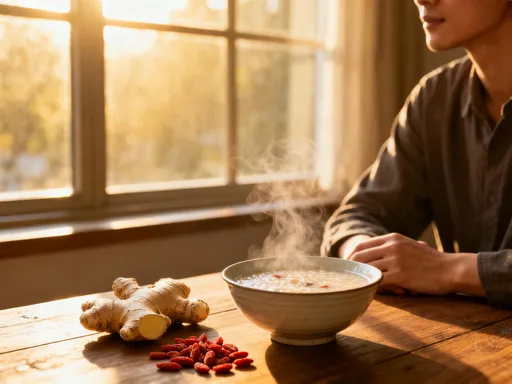
I started incorporating simple, nourishing ingredients into my daily meals. Ginger, for example, is warming and supports digestion—perfect for adding to soups or morning tea. Red dates and goji berries are known to nourish the blood and calm the mind, so I toss them into porridge or herbal teas. I also reduced my intake of icy drinks and dairy, which can contribute to dampness and sluggishness in the body.
A typical day now includes congee with ginger and a poached egg for breakfast, a balanced lunch with warm grains, vegetables, and lean protein, and a light soup or stew in the evening. These meals aren’t elaborate, but they’re deeply satisfying and easy to digest. I no longer feel drained after eating. Instead, I feel nourished. Food has become a daily act of care, not just consumption.
Movement That Nourishes, Not Drains
For years, I equated fitness with intensity. Long runs, heavy weights, and high-intensity interval training were my go-to. I believed that if I wasn’t sweating and sore, I wasn’t doing enough. But over time, I noticed a pattern: the more I pushed, the more fatigued I felt. My energy never seemed to recover. In TCM, this makes sense. Overexertion can damage Qi, especially if the body isn’t given time to replenish. Exercise should support vitality, not deplete it.
I began to explore gentler forms of movement. I started with daily walks after meals, which in TCM helps digestion by stimulating the spleen and stomach. I then discovered tai chi, a slow, flowing practice that emphasizes breath, alignment, and internal awareness. At first, I was skeptical—how could such slow movements make a difference? But after a few weeks, I noticed improvements in my balance, focus, and stamina. My joints felt looser, my breathing deeper.
The concept of dong jing jie he—the balance of movement and stillness—became central to my routine. Instead of long, draining workouts, I now do 20 minutes of tai chi in the morning, a 30-minute walk after lunch, and some gentle joint mobilization before bed. This approach doesn’t leave me exhausted. It leaves me energized. I’ve learned that movement doesn’t have to be hard to be effective. Sometimes, the softest actions create the deepest change.
When to Seek Help—and How I Found the Right Guide
While self-awareness is powerful, I’ve also learned that professional guidance is essential. There’s a difference between tuning in and self-diagnosing. In TCM, practitioners use methods like pulse reading and tongue analysis to assess internal balance—tools that can’t be replicated through guesswork. I made the mistake early on of trying to label myself based on symptoms, only to realize I was misinterpreting my body’s signals.
Finding a licensed TCM practitioner changed everything. My practitioner didn’t offer quick fixes. Instead, she asked detailed questions about my sleep, digestion, energy patterns, and emotional state. She examined my tongue and took my pulse, then offered personalized suggestions—herbal teas, dietary tweaks, and lifestyle adjustments. It wasn’t about following a trend. It was about receiving care tailored to my unique constitution.
I also continue with regular modern health check-ups—blood work, physical exams, and screenings. I don’t see TCM as a replacement for Western medicine, but as a complement. Together, they offer a fuller picture of health. One addresses acute issues and diagnostics; the other supports long-term balance and prevention. By combining both, I feel more empowered and informed.
If you’re considering this path, my advice is to seek qualified professionals. Look for licensed acupuncturists or TCM practitioners with formal training. Avoid influencers selling supplements or miracle cures. True wellness isn’t about products. It’s about presence, patience, and partnership with someone who understands the body’s deeper rhythms.
Conclusion
True health isn’t about chasing perfection. It’s about tuning in—daily, gently, consistently. My journey with Chinese wellness isn’t about ancient rituals or mystical cures. It’s about structure, awareness, and respect for my body’s innate wisdom. By simplifying my habits and aligning with natural rhythms, I’ve built a sustainable system that works with me, not against me. This isn’t a trend. It’s a lifelong conversation with myself—one I wish I’d started sooner. The most powerful health tool I’ve discovered isn’t a supplement, a workout, or a diet. It’s the quiet practice of listening. And once you begin, you may find, as I did, that your body already knows the way forward.